Cosa vedere Aieta Calabria: The Ultimate Guide to the Renaissance Village
Perched gracefully at 524 meters above sea level, nestled within the majestic Pollino National Park and overlooking the sparkling Tyrrhenian Sea, Aieta is one of Calabria's best-kept secrets. Recognized as one of the "Most Beautiful Villages in Italy" (I Borghi più Belli d'Italia), this charming mountain town offers a fascinating journey through time. If you are planning a trip to the south of Italy and wondering about the best cultural and historical destinations, this comprehensive guide will show you exactly why this village deserves a prominent spot on your itinerary. From its unique Renaissance architecture to its breathtaking natural surroundings, Aieta provides an authentic and unforgettable Calabrian experience.
Unlike the bustling coastal resorts of the Riviera dei Cedri, Aieta invites visitors to slow down and savor the authentic rhythms of southern Italian life. The air is crisp, the locals are incredibly welcoming, and every stone-paved alleyway whispers tales of noble families, ancient monks, and skilled local artisans. Whether you are a history enthusiast, a nature lover, or simply a traveler seeking off-the-beaten-path destinations, exploring this village will undoubtedly captivate your heart.
Le attrazioni principali: The 5 Must-See Wonders of Aieta
When exploring the village, there are five absolute must-see attractions that define its historical and cultural identity. The crown jewel is undoubtedly the Palazzo Rinascimentale (Renaissance Palace). Built in the 16th century by the powerful Spinelli family, this magnificent structure dominates the valley. It is a rare and pristine example of Renaissance architecture in a region predominantly known for Norman and Byzantine ruins. The palace features an elegant loggia, grand halls, and stunning architectural details. Entry typically costs around 3 to 5 euros, and it is generally open to the public from 10:00 AM to 1:00 PM and from 4:00 PM to 7:00 PM during the summer months. It is highly recommended to take a guided tour to fully appreciate the frescoes and the history of the noble families who once walked these halls.
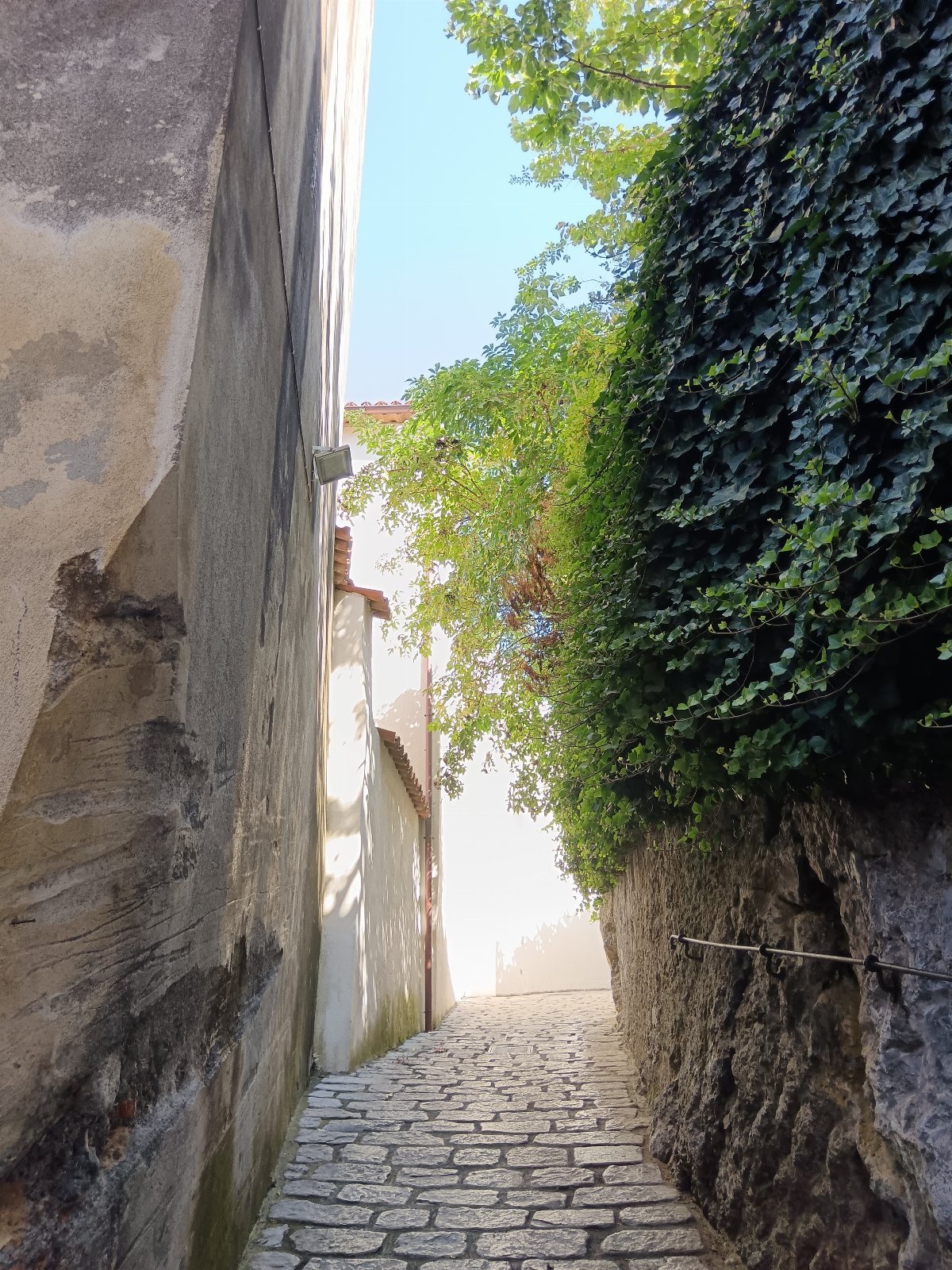
The second unmissable attraction is the Centro Storico (Historic Center) itself, famous for its magnificent stone portals. As you wander through the narrow streets, you will discover over sixty intricately carved stone doorways dating back to the 17th and 18th centuries. These portals were crafted by skilled local stonemasons from the nearby town of Fuscaldo and served as status symbols for the wealthy families of Aieta. The third attraction is the famously romantic Vico dei Baci (Alley of Kisses). Measuring just 52 centimeters in width, it is one of the narrowest alleys in Italy. Legend has it that the alley is so tight that two people passing through simultaneously are forced to walk so closely that a kiss is inevitable.
Rounding out the top five are the Belvedere di Piazza Largo and the Antichi Lavatoi (Ancient Washhouses). The Belvedere offers a jaw-dropping panoramic view where the rugged mountains of the Pollino National Park plunge dramatically toward the blue waters of the Gulf of Policastro. It is the perfect spot for photography, especially at sunset. Just a short walk away, you can visit the ancient public washhouses, a poignant reminder of the village's rural past where local women would gather to wash clothes and share the news of the day. Exploring these sites is completely free and offers a profound connection to the daily life of historical Calabria.
Musei e siti culturali: Immersive History and Local Heritage
Aieta is not just an open-air museum; it also hosts dedicated cultural spaces that bring its rich history to life. Inside the magnificent Palazzo Rinascimentale, you will find the MuVi d'Arte (Virtual Museum of the Renaissance). This innovative museum uses cutting-edge 3D mapping, holograms, and interactive displays to transport visitors back to the 16th century. You can witness virtual recreations of the Spinelli family's lavish banquets, understand the architectural construction of the palace, and learn about the political intrigues of the era. The museum perfectly blends ancient walls with modern technology, making history accessible and engaging for visitors of all ages.
Another significant cultural site is the Museo della Civiltà Contadina e Artigiana (Museum of Rural and Artisan Life). This charming collection is dedicated to preserving the memory of the agricultural and artisan traditions of the Pollino area. It features authentic tools used for wheat harvesting, wine making, and olive oil pressing, as well as ancient looms used by local women to weave broom fiber and silk. The exhibits provide a stark but fascinating contrast to the noble life depicted in the Renaissance Palace, offering a complete picture of the society of Aieta.
These cultural sites are generally managed by the local municipality and passionate cultural associations. Operating hours are usually aligned with the Palazzo Rinascimentale, but it is always wise to check ahead during the off-season. Because the village is compact, reaching these museums is as simple as taking a pleasant stroll from the main square. Immersing yourself in these cultural treasures is a wonderful way to spend an afternoon, especially if you have secured a comfortable accommodation in Aieta to rest in between your historical explorations.
Chiese e monumenti storici: Sacred Art and Architecture
The religious architecture of Aieta is a testament to the deep spiritual roots of the community. The most important religious building is the Chiesa Madre di Santa Maria della Visitazione (Mother Church). Dating back to the 16th century, this church is a stunning example of religious art in southern Italy. Its interior is adorned with beautiful frescoes, wooden statues, and a magnificent pipe organ. However, the most precious treasure housed within its walls is a stunning silver processional cross dating back to 1573, a masterpiece of Neapolitan goldsmithing that highlights the wealth and importance of the village during the Renaissance.
Just outside the main residential area lies the evocative Convento dei Frati Minori Osservanti (Convent of the Friars Minor Observant), dedicated to San Francesco d'Assisi. Founded in the early 16th century, the convent features a beautiful cloister with a central well and remnants of ancient frescoes depicting the life of Saint Francis. Although partially in ruins, the site possesses a deeply serene and mystical atmosphere. The adjacent church, dedicated to San Francesco, still holds religious services on special occasions and is a beautiful example of Franciscan simplicity.
As you explore the surrounding countryside, you will also encounter the Cappella di San Vito and the remnants of ancient watermills along the Fiumarella river. These smaller historical monuments, connected by ancient mule tracks, tell the story of a time when religion and agriculture were deeply intertwined. The stone bridges, such as the Ponte di Sant'Elia, showcase the incredible engineering skills of the past. Walking among these historical monuments feels like stepping into a beautifully preserved painting of a bygone era.
Natura e parchi naturali: The Gateway to the Pollino
For nature enthusiasts, Aieta serves as a spectacular gateway to the Parco Nazionale del Pollino, the largest national park in Italy. The natural environment surrounding the village is characterized by a dramatic contrast between the rugged, alpine-like peaks and the lush, Mediterranean vegetation that slopes down toward the sea. The air here is pure, filled with the scents of wild oregano, rosemary, and ancient pine forests.
One of the most rewarding excursions is the hike up Monte Ciagola. The trail begins just outside the village and winds through dense forests of oak and chestnut trees before opening up to rocky plateaus. The hike requires a moderate level of fitness, but the reward at the summit is unparalleled: a 360-degree view that encompasses the snow-capped peaks of the Pollino massif to the east and the shimmering expanse of the Tyrrhenian Sea to the west. On clear days, you can even spot the Aeolian Islands in the distance. Birdwatchers will also be delighted, as the area is a habitat for golden eagles, peregrine falcons, and the rare black woodpecker.
If you prefer a gentler walk, the Valle della Fiumarella offers a magical experience. This river valley is characterized by crystal-clear streams, small waterfalls, and lush ferns. A well-marked path follows the course of the water, leading you past the ruins of ancient stone mills that once ground the village's grain. It is a cool, shaded oasis perfect for a summer hike, providing a refreshing escape from the heat of the Calabrian sun.
Itinerario in un giorno: Maximizing Your 8-Hour Visit
To truly appreciate the magic of this village, a well-planned one-day itinerary is essential. Start your morning at 9:30 AM in the main square, Piazza Largo, with a traditional Italian breakfast—a rich espresso and a freshly baked pastry from a local café. Take a moment to enjoy the breathtaking view from the Belvedere before heading to the Palazzo Rinascimentale at 10:00 AM. Spend a couple of hours exploring the grand halls, the loggia, and the immersive Virtual Museum, diving deep into the noble history of the region.
By 12:30 PM, it is time to wander through the historic center. Hunt for the beautifully carved stone portals and make sure to squeeze through the romantic Vico dei Baci. For lunch at 1:30 PM, choose a traditional local *trattoria*. You must try the local specialties: handmade *fusilli* pasta with a rich goat ragù, a platter of local cured meats including the spicy *salsiccia*, and a side of *pipi cruschi* (crunchy dried sweet peppers). Pair your meal with a robust glass of local red wine.
In the afternoon, around 3:30 PM, visit the Chiesa Madre to admire the 16th-century silver cross, and then take a leisurely walk out to the Convent of the Friars Minor Observant. The afternoon light filtering through the ancient cloister is a photographer's dream. Conclude your day around 6:00 PM back in the village center for an *aperitivo*. Sip an Aperol Spritz or a local craft beer as you watch the sun dip below the Tyrrhenian horizon, before returning to your room in Aieta to relax after a day of exploration.
Cosa vedere nei dintorni: Exploring the Riviera and Beyond
Aieta's strategic location makes it an ideal base for exploring both the mountains and the coastline, with several incredible destinations located just 30 to 60 minutes away. A mere 30-minute drive down the winding mountain road brings you to Praia a Mare, famous for its expansive pebble beaches and the spectacular Isola di Dino. You can rent a small boat or join a guided tour to explore the island's magnificent sea caves, including the Grotta Azzurra (Blue Cave) and the Grotta del Leone (Lion's Cave), where the water glows with an otherworldly blue light.
Just a short distance from Praia a Mare is the town of Scalea, another gem of the Riviera dei Cedri. Scalea boasts a fascinating historic center built on a terraced hill, topped by the ruins of a Norman castle. The Torre Talao, an ancient coastal watchtower built to defend against Saracen pirate attacks, stands proudly on a rocky outcrop near the beach and is well worth a visit.
If you wish to delve deeper into the Pollino National Park, drive 45 minutes inland to the municipality of Papasidero. Here, you can visit the Grotta del Romito, one of the most important prehistoric archaeological sites in Europe, featuring a stunning paleolithic rock carving of a *Bos primigenius* (an extinct wild ox). Papasidero is also the hub for white-water rafting on the Lao River, offering an adrenaline-pumping experience through deep, spectacular limestone gorges.
Dove dormire per visitare Aieta con calma
To truly absorb the enchanting atmosphere of this Renaissance pearl, visiting for just a few hours is not enough. When the day-trippers leave and the sun sets, the village transforms. The stone streets are bathed in the warm glow of streetlamps, and the silence of the mountain night descends, offering an incredibly peaceful experience that you can only enjoy if you choose to stay overnight.
A Aieta sono disponibili 1 alloggi selezionati. Scopri gli alloggi a Aieta.
Staying locally allows you to wake up to the sound of church bells, enjoy a slow morning coffee with the locals, and experience the genuine warmth of Calabrian hospitality. It provides the perfect, tranquil basecamp for exploring the Pollino National Park and the nearby coastal towns without the stress of long daily commutes.